


What Is Cotton Linen Slippers?
Cotton linen slippers are a type of footwear that combines both cotton and linen materials in their construction. These slippers typically have a cotton upper for softness and comfort, while the lining or insole may be made of linen for its moisture-wicking and breathable properties. The combination of cotton and linen creates a lightweight and breathable slipper that is suitable for indoor wear. Cotton linen slippers are often favored for their comfort and natural materials that help keep the feet cool and dry.
》Cotton-linen fibre is sewn using pure cotton. This makes it not easy to deform, anti-static, and no rolling and edge issues.
》Since they are natural-based, these fabrics are both environmental-friendly. It didn't use any chemicals or pesticides. It also doesn't contain other ingredients like formaldehyde, azo, and other heavy metal ions. With this, it passes various environmental-related requirements like the European community textile community standards.
》The cotton-linen blend is air-permeable. It means that it quickly absorbs sweat from the skin, producing a more comfortable and non-sticky feeling for the wearer.
》Its air-permeability is a breathable textile because of its sweat absorption feature. It's a perfect choice for close fitting use and can be worn any season.
》The warmth effect of this fabric helps the wearer achieve better sleep quality. As it produces more warmth, it increases the microcirculation flow of the body. It also regulates the nervous system, causing the meridian to dredge and enhances a person's sleep.
》This fabric is a guaranteed skin-friendly fabric. It is antipruritic or does not cause itchy or irritating issues to the skin. It also has the right pH value intended for the skin. That is why, besides being environmentally-friendly, it passes the individual health requirements.
》Besides clothing, cotton and linen combinations are also used as bags. Compared to other baggage types, these bags are great for packing electronic devices, jewelry, and even medicinal materials. Its exceptional quality ensures better safety and security of these products.


Why Choose Us
Factory
Ningbo Biomax Group was founded in 2011 and is headquartered in Ningbo, Zhejiang, China. There are 3 development centers in Ningbo, Jinjiang and Chaozhou. We own a plush raw material factory, an injection molding factory and three shoe factories in Ningbo Cixi.
Rich product species
The product field covers all categories of footwear and slippers. Including fashion shoes, slippers, injection molding shoes, vulcanized shoes, sports shoes, beach shoes and other glued shoes for all genders.
Superior sales volume
We produce and ship more than 15 million pairs of shoes each year, with a turnover of 40 million US dollars in 2023.
Professional certification
The company has obtained certifications such as GRS&RCS, BSCI, OEKO-TEX and SMETA.

Turkish cotton slippers
Turkish cotton is one of the most versatile materials for making home slippers. Soft, cozy, and easy to care for, these slippers are warm enough for chilly mornings and won't leave you feeling stuffy or sweaty after hours of wearing them.
Wool slippers
Wool is a well-loved material with a wide range of uses. From cozy rugs in an airy hallway to warm, soft slippers, wool is known for its warmth and breathability. It's even a popular material for cuffs and collars on winter coats.
Suede and wool
Suede and leather slippers get high marks for durability, warmth, and weatherproofing. From classic moccasins to modern house slippers, suede adds a touch of style to your casual look.
Waffle weave cotton
Honeycomb waffle cotton is the perfect material for house slippers. The combination of thick cushioning and a lightweight, breathable texture provides the perfect balance of coverage and support. Plus, waffle cotton is machine washable, so your warm slippers are as easy to care for as your favorite towel or bathrobe.
Indoor wear
Cotton linen slippers are very comfortable to wear indoors, and are suitable for lazy afternoons or short outings. They can easily handle different leisure times indoors and outdoors, bringing a sense of ease and comfort to the wearer.
Outdoor activities
In addition to indoor wear, cotton linen slippers are also suitable for outdoor activities. They are light and soft, providing comfort for the feet, and their good breathability can keep the feet dry, which is very suitable for summer wear. In addition, the anti-slip design of cotton linen slippers also ensures safety when wearing.
Home scene
Cotton linen slippers are very suitable for home scenes because of their soft, skin-friendly and breathable charascteristics. Whether at home or out, cotton linen slippers are the best choice, providing comfort and convenience.
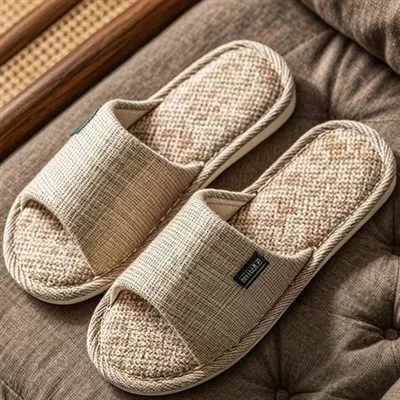
Material of Cotton Linen Slippers
Faux fur
Slippers made from faux fur are ideal for the fall and winter months, as well as for those who live in cooler climates.
Leather
Genuine leather slippers are naturally long-lasting and provide instant stability. And the more you wear them, the more supple they become! Remember to spray your leather house slippers with a protectant and use a leather care kit to refresh them as needed.
Fleece
Fleece slippers are another popular choice for fall and winter, thanks to their snuggly texture. Look for synthetic fleece material if you don't want to break the bank. For slippers that'll last for years, opt for a pair made from natural fleece.
Suede
Suede house slippers last for a long time, but it's worth noting that they require maintenance. Take care not to spill water on them, though it's not the end of the world if you do—water stains are treatable with a suede solution.
Synthetic
Unlike those made of natural materials, slippers made from synthetic materials (e.G., polyester, rayon and nylon) are pretty low maintenance. Consider buying synthetic slippers if your household is prone to spills and messes, as many can be machine washed. If you'd prefer to go the sustainable route, look for recycled synthetic materials.
Other fabric
Slippers in classic fabrics are ultrawearable—you can work from home and still feel put-together. They're great as houseguest slippers too. Make them an extension of your interior style by matching them to your home's vibe (i.E., canvas for a coastal aesthetic or velvet for a glam space).
Rubber
Rubber house slippers are a must for cleaning days. Just be sure to get an ergonomic design with a thick, cushioned sole—rubber can be rather unforgiving, but these features can relieve sore feet.
How to Maintain Cotton Linen Slippers
Gentle cleaning
Use a brush or soft cloth to gently scrub the suede slippers, and avoid using detergents containing acid and alkali ingredients to prevent damage to the suede fibers.
Apply maintenance agent
Use professional waterproof spray or suede maintenance agent to increase the waterproof performance and wear resistance of suede slippers. Spray or wipe evenly when using, and use repeatedly after drying for better results.
Pay attention to moisture-proof
Once suede slippers are soaked in water, they are prone to deformation and mold. Therefore, please try to avoid wearing suede slippers in humid weather, or clean and maintain them in time after the water stains are dry.
How to Deodorize Cotton and Linen Slippers
★Use cotton to dip some alcohol and stuff it into the shoes. After one night, the alcohol will evaporate and the odor will be removed. You can wear it the next day.
★Use a slightly hard paper to wrap the mothballs and stuff them into the shoes; or crush the mothballs and then sprinkle the powder evenly into the shoes. Put insoles on them. A pair of shoes only needs about one mothball. This can keep the shoes dry and remove shoe odor. Mothballs have a good antibacterial effect and can also kill bacteria that multiply in large numbers due to moisture.
★Before going to bed every night, put quicklime powder into a small cloth bag and put it into the shoes to absorb moisture. The lime bag can also kill bacteria in the shoes and can play a certain role in removing shoe odor. It can be used repeatedly.
★A simpler method is to sprinkle some salt in the shoes to absorb sweat and deodorize. (But it is a little troublesome to clean up)
★You can buy some deodorant-like sprays on the market and spray them in the shoes every day to relieve shoe odor.
★Alum also has a deodorizing effect. You can sprinkle some alum powder into your shoes. (It is available in general pharmacies)
★If your shoes are not worn and placed in the shoe cabinet, you can put a piece of soap next to them to achieve the deodorizing effect.
★Wrap some dry tea leaves in glass stockings and stuff them into cotton and linen slippers. It has the effect of cleaning, disinfecting and volatilizing odors.
Process of Cotton Linen Slippers


Design and development
The first step in the manufacturing process is the design and development of the slipper. This may involve creating a prototype or sample of the slipper, determining the materials and components needed, and developing a production plan.
Cutting
The next step is to cut out the individual components of the slipper from raw materials such as leather, fabric, or synthetic materials. This is usually done using a cutting machine or mold.
Once the pattern is complete, the material is cut and shaped according to the slipper pattern using various techniques such as die cutting, laser cutting, or hand cutting. The materials are then sewn or glued together to form the basic structure of the slipper.
Stitching
After the components are cut, they are sewn together using a sewing machine. The sewing process can be done by hand or machine, and the specific technique used depends on the type of slipper.
Assembly
After the components are sewn together, they are assembled into the finished shoe. This may involve attaching the sole to the upper, attaching any hardware such as laces or buckles, and adding any extra features or decorations.
Finishing
The final step in the manufacturing process is finishing, which involves applying the final touches to the slippers, such as adding linings, installing insoles, or finishing the uppers.
Quality control
Before the slippers are shipped to customers, they go through a series of quality control checks to ensure that they meet the necessary standards. This can include defect inspections, fit testing, and performance testing.
Remove loose dirt
Begin by lightly brushing the surface of your slippers with a soft brush or sponge. This will help remove any loose dirt or debris that may be stuck in the fibers. Be sure to brush in the direction of the suede or wool to avoid damaging the material.
Spot clean the stains
If you notice a stain on your slippers, be sure to treat it as soon as possible. Dampen a clean cloth with cold water and add a small amount of mild detergent or a special suede cleaner. Gently rub the stained area, being careful not to rub or scrub too hard. Rinse the cloth with clean water and continue wiping until the stain is no longer visible.
Clean the entire slipper
Once you have removed all the stains, it is time to clean the entire slipper. Fill a basin or sink with cold water and add a small amount of mild detergent or a special sheepskin cleaner. Submerge the slippers in the water and gently agitate to distribute the cleaning solution. Allow the slippers to soak for a few minutes.
Rinse and dry
After the slippers have soaked, remove them from the water and rinse thoroughly with clean, cold water. Gently squeeze out any excess water, being careful not to wring or twist the slippers. Place them on a clean towel to reshape them to their original shape. Allow the slippers to air dry away from direct heat or sunlight, as this can cause the material to become stiff or fade.
Brush and fluff
Once the slippers are completely dry, use a dry, soft brush to gently fluff the wool. This will help restore its natural texture and appearance. Brush in the direction of the fibers to avoid damaging the material.
What Are the Trends and Development Directions of Cotton Linen Slippers in the Market
The appeal of personalization
In a world that celebrates individuality, personalized items have a special appeal. Slippers give consumers the opportunity to express their unique style and personality in a practical and comfortable way. Whether it's a monogram, a favorite pattern or a custom design, personalization adds a personal touch to everyday items.
Customizable options
One of the key trends driving personalization in slippers is the wide range of customizable options consumers can choose from. From choosing the color and material of the slippers to selecting personalized embroidery or printing options, customers can customize their slippers to their preferences. This level of customization can create a truly unique product that reflects the wearer's personality.
Monogram mania
Monogramming is becoming increasingly popular in the fashion and accessories world, and slippers are no exception. Adding initials or monograms to slippers can add a touch of sophistication and elegance. Whether embroidered or printed, monogrammed slippers make a stylish statement while also giving a sense of ownership and belonging.
Photo printing
Another increasingly popular trend in slipper design is photo printing. This innovative technology allows customers to print photos directly onto slippers, preserving their favorite memories forever. Whether it's a beloved pet, a cherished vacation spot, or a special moment spent with a loved one, photo-printed slippers will remind you of cherished memories with every step you take.
Graphic design
Graphic design is also making waves in the world of personalized cotton and linen slippers. From bold patterns and geometric shapes to whimsical illustrations and iconic symbols, the creativity that can be applied to slipper design is endless. Graphic prints allow wearers to showcase their interests, hobbies, and passions through their shoes, creating a playful and eye-catching style.
Seasonal themes
Seasonal themes are a fun and festive way to personalize cotton and linen slippers year-round. Whether it's cozy winter patterns like snowflakes and reindeer, or bright florals for the spring and summer seasons, seasonal designs add a touch of seasonal cheer to any outfit. Changing up your slippers according to the season allows wearers to get in the festive spirit and easily change up their look.
Our Factory
Ningbo BlOMSIS Group was founded in 2011, the head office is located in Ningbo, Zhejiang, China. There are 3 development centers located in Ningbo, Jinjiang and Chaozhou. We have Plush Raw Material Factory, Injection Molding Factory, and three shoes producing factories in Cixi, Ningbo.
Product areas cover all categories of footwear and slippers. It includes fashion shoes, slippers, injection, vulcanized, sports, beach and other cemented shoes in all genders.
We produced and shipped more than 15 million pairs of shoes per year, with turn over of 40 million USD in 2023.
Company got the certificates of GRS&RCS, BSCI, OEKO-TEX, and SMETA, etc. We warmly welcome you to visit our group in near future, and make cooperation with good values.

FAQ
Q: What is the best material for slippers?
Q: What is the warmest type of slipper?
Q: What is the difference between slippers and footwear?
Q: How to select slippers?
Q: Are you supposed to wear socks with slippers?
Q: How do I choose a pair of slippers?
Q: Are cotton slippers good?
Q: What material are slippers made of?
Q: What material is best for warm slippers?
Q: What makes a good slippers?
Q: Should you buy slippers a size bigger or smaller?
Q: Should slippers be tight or loose?
Q: How do you wash cotton slippers?
Q: Which sole is best for slippers?
Q: What is the most comfortable material for slippers?
Q: What type of slippers should we wear?
Q: What are Japanese slippers made of?
Q: What are the best slippers for cold floors?
Q: What is the best shoe material for hot weather?
Q: What fabric is best for warm feet?
We're professional cotton linen slippers manufacturers and suppliers in China, specialized in providing high quality products and service. We warmly welcome you to wholesale customized cotton linen slippers made in China here from our factory.
iraqi linen slippers, nepalese linen slippers, zimbabwean linen slippers